
logo

Dental Implants

Dental implantation is an effective, reliable, and long-lasting method of replacing missing teeth. During the procedure, an artificial tooth root—an implant—is screwed into the jawbone, onto which a dental crown, bridge, or denture is attached. Implantation ensures a natural aesthetic appearance, full chewing function, and helps prevent jawbone loss and many other health problems. With proper oral care, teeth restored on implants last for decades and provide long-term comfort.

Why should you choose dental implants?

  • Durability. This is the most durable method of tooth restoration—many manufacturers offer a lifetime warranty on implants.
  • Natural appearance. Restored teeth not only look extremely natural—they also feel just like your own teeth.
  • Comfort. Teeth restored on implants are completely stable; you’ll be able to chew freely, smile, and feel confident.
  • Oral health. They protect the jawbone and gum tissue. Meanwhile, poorly fitting removable dentures place uneven pressure on the jawbone, causing bone loss in areas of excessive pressure and gum recession.

What should you know before the procedure?

A consultation is required before dental implantation, during which:

  • We will discuss your expectations;
  • We will assess your clinical situation, perform the necessary tests, and take a 3D X-ray;
  • We will prepare and present a detailed treatment plan to you;
  • We will answer all of your questions.

Modern technologies used in dental implantology:

3D Computed Tomography

It allows for a precise assessment of the condition, structure, and anatomical features of the jawbone, helps select the optimal implant position, and ensures flawless prosthetic restoration and long-lasting results.

Intraoral scanner

Digitally scanning the structures of the teeth and oral cavity allows for the creation of highly accurate treatment plans and prosthetic models.

Virtual treatment planning

A procedure planned in advance using specialized software allows us to select the optimal implant parameters, avoid human error, ensure a less invasive procedure, and, even in the most complex cases, place the implant in such a way that the prosthesis can be precisely fitted onto it.

What makes dental restoration with implants at our clinic so special?

  • We use state-of-the-art diagnostic and treatment equipment, which allows us to plan treatment with exceptional precision and ensure a smooth process;
  • Procedures are performed by highly qualified implantology specialists with many years of experience;
  • We use premium-class implants from globally recognized manufacturers (Neobiotech, etc.); When clinically appropriate, we perform same-day implant placement (during the same procedure, the damaged tooth is extracted, the implant is placed, and a temporary restoration is fitted, ensuring faster and more comfortable tooth restoration).
  • All diagnostic and treatment services are provided in one location, saving you time; You can take advantage of VLK reimbursement and pay for treatment in installments.

OPTIONS FOR DENTAL RESTORATION WITH IMPLANTS

SINGLE-TOOTH RESTORATION

This is the simplest scenario, in which an implant is placed in the site of the missing tooth, and a dental crown is attached to it either immediately or after the implant has healed. This method preserves the adjacent healthy teeth.

In the right clinical situation, same-day implantation can be performed, where the tooth is extracted and an implant is placed in its place during the same procedure. This ensures less invasiveness, a faster healing period, and a better aesthetic result.

Restoration of Adjacent Teeth

If you have lost 3–4 adjacent teeth, they can be restored by placing just 2 implants and attaching a dental bridge to them. Each tooth can also be restored with a single implant. In each case, the dentist will recommend the most appropriate solution after assessing the patient’s clinical situation.

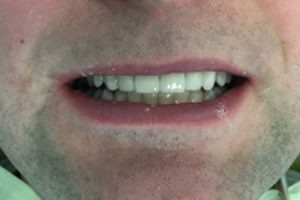
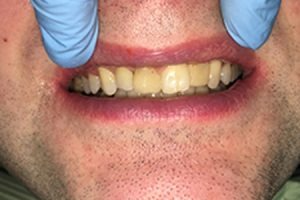
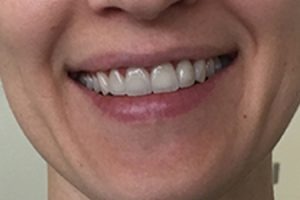
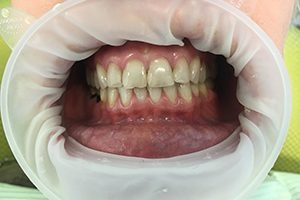
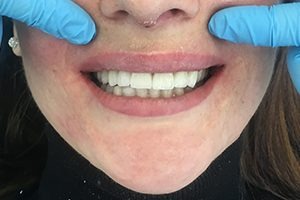
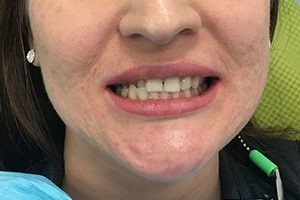
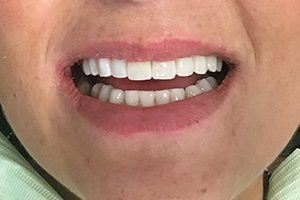
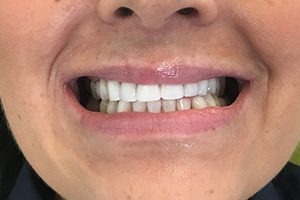
EXAMPLES OF TREATMENT

Po
Prieš

Prieš

Po

Po
Prieš

Prieš

Po

FULL-MOUTH DENTAL RESTORATION / ALL-ON-4 METHOD

All the teeth in a single jaw can be restored by placing 4–8 implants and attaching a fixed prosthesis to them. The number of implants required is determined during the consultation, after assessing the condition of the patient’s mouth and bone, their expectations, and their financial situation.

EXAMPLES OF TREATMENT

Po
Prieš

Prieš

Po

Po
Prieš

Prieš

Po

PROCEDURE:

Consultation

During the consultation, the condition of the teeth and mouth is assessed, necessary examinations are performed, the appropriate implant method is selected, and a detailed treatment plan is developed and presented to the patient.

Implantation

After administering local anesthesia, the implant(s) is/are inserted, and a healing cap is placed over it/them.

Temporary dentures

The implant heals within 3–6 months. During the healing period, a temporary prosthesis can be placed on the implant(s) if the patient wishes.

Dental Restoration

Once the implant(s) has successfully fused with the bone and become firmly anchored in the jawbone, a permanent restoration—such as a crown or denture—is attached to it, restoring both the function and aesthetics of the teeth.

Svarbu žinoti

What are the risks of not getting your teeth restored in time?

Changes in appearance

Loss of aesthetic appeal in the smile. Missing teeth make the smile look unattractive, and trying to hide it causes facial expressions to fade.


Tooth shifting. If lost teeth are not replaced, the remaining teeth may begin to shift into the empty spaces, causing an irregular bite.

Changes in facial shape. Tooth loss can lead to bone loss in the jaw, causing the cheeks to hollow out and the lip line to droop, making a person look older.

Digestive disorders

Impaired chewing. Impaired chewing due to missing teeth can lead to digestive problems.

Incomplete digestion of food. Food that is not chewed thoroughly can interfere with the proper absorption of nutrients, leading to a weakened immune system and a decline in overall well-being.

Speech sound disorders

Unclear speech. Teeth play an important role in producing certain sounds, so losing them can disrupt their formation and cause a lisp.

A change in voice quality. Missing teeth can alter the airflow in the mouth, causing changes in voice quality and intonation.

Psychological challenges

Reduced self-confidence. Tooth loss often causes discomfort regarding one’s appearance, especially when smiling or speaking.

Social isolation. A lack of self-confidence can lead to giving up on favorite activities and withdrawing into oneself.

Increased sensitivity. A prolonged sense of inadequacy can lead to psychological problems; a person becomes more irritable, anxiety increases, and over time this can even lead to depression.

Free consultation

Contact
Free consultation

Payment options

We want everyone to be able to enjoy a perfect smile, so we invite you to take advantage of:

Payment in installments
GF Bank

Payment in installments

Special offers from GF Bank – pay conveniently, get treatment now.

Learn more
TLK reimbursement
Health Insurance Funds

TLK reimbursement

Get reimbursement from the Health Insurance Fund for dental prosthetics and enjoy a perfect smile!

Learn more

Book an appointment

A reservation request has been submitted

Thank you, the registration form has been successfully submitted. We will review your request and contact you as soon as possible.

Close

logo
image

F.A.Q.


The procedure is performed under local anesthesia, so you will not feel any pain. Discomfort after the surgery is minimal and easily managed with medication.


Implants from world-renowned manufacturers today boast an exceptionally high integration rate—up to 99%. However, it is important to note that proper oral hygiene and strict adherence to the dentist’s recommendations are crucial for successful integration.


Implants are firmly anchored in the jawbone, ensuring full chewing function, comfort, and a natural appearance. They do not damage adjacent teeth, do not harm the oral mucosa, protect the bone from resorption, and last for many years.


With proper care, implants can last for decades or even a lifetime.

Online registration

Book an appointment

A reservation request has been submitted

Thank you, the registration form has been successfully submitted. We will review your request and contact you as soon as possible.

Close
logo

Book an online consultation

A reservation request has been submitted

Thank you, the registration form has been successfully submitted. We will review your request and contact you as soon as possible.

Close

logo